
Deep Tech Trends 2027: 10 Trends Shaping Deep Tech Startups Worldwide, and the Official Programmes You Can Use
Deep tech startups build on new science: AI models and chips, quantum, fusion and clean energy, space, biotech, robotics and advanced materials. Their trends are set less by hype than by public money and rules: who funds compute, which standards become mandatory, which agencies buy prototypes. This guide covers the 10 deep tech trends that matter most for founders in 2027. Each one is backed by an official or primary source (WIPO, the European Commission, the European Innovation Council, DARPA, NIST, the US Department of Energy, ESA and NATO), with what is happening, the programme or funding route you can use, and what it means for a startup. Facts were checked on 12 November 2026. If you are choosing where to build, read our guides to the best countries for deep tech and the top deep tech cities. For the programmes and policies shaping the region, read our guide to deep tech trends in Asia.
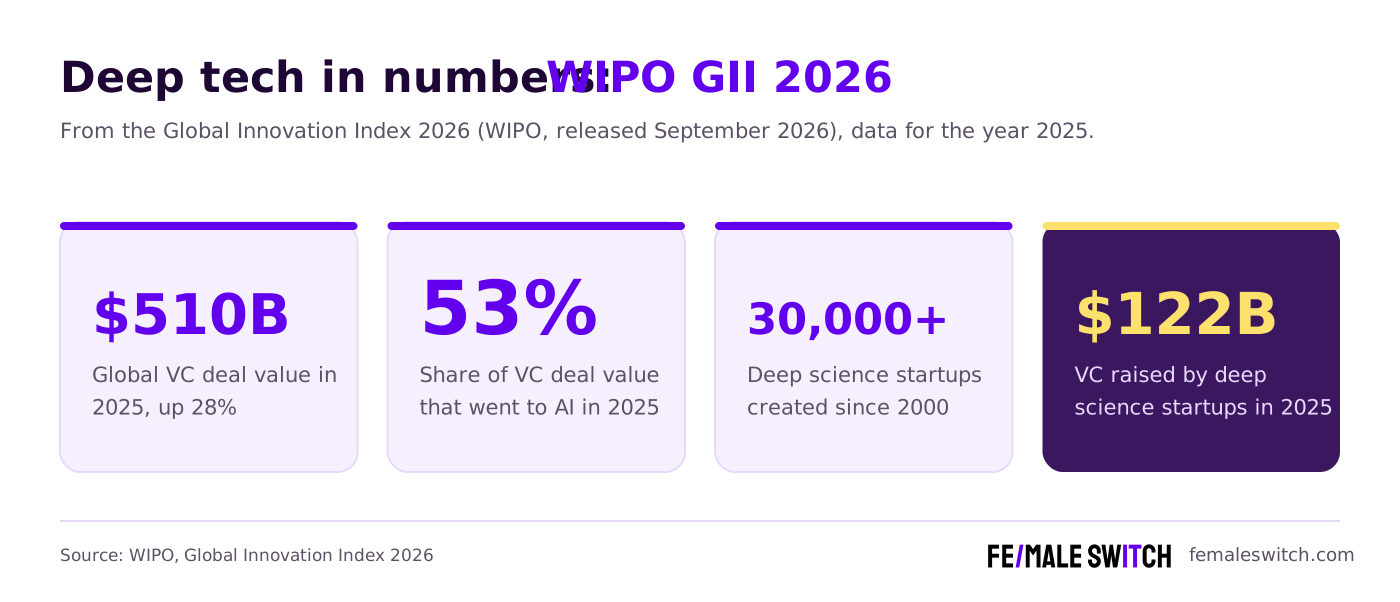
Quick answer: the big deep tech trends for 2027 are (1) AI taking most of the venture money while public AI compute opens up to startups, (2) the AI Act's rules becoming concrete, (3) a funding gap at Series B and C that new scale-up funds try to close, (4) quantum computing judged by hard benchmarks, (5) the move to post-quantum cryptography, (6) chip design opening to startups, (7) fusion and climate hardware getting dedicated challenges, (8) a regulated space economy, (9) dual-use and defence tech, and (10) biotech and biomanufacturing. According to WIPO's Global Innovation Index 2026, AI took 53% of global VC deal value in 2025, and deep science startups raised $122 billion that year.
Boost Your SEO by Getting Featured in Our Blogs and get a backlink.
We publish content about startups, education, tech, funding, etc. that ranks well not only in Google but also in Perplexity, ChatGPT, Grok and other AI tools.
👉 Get featured now!
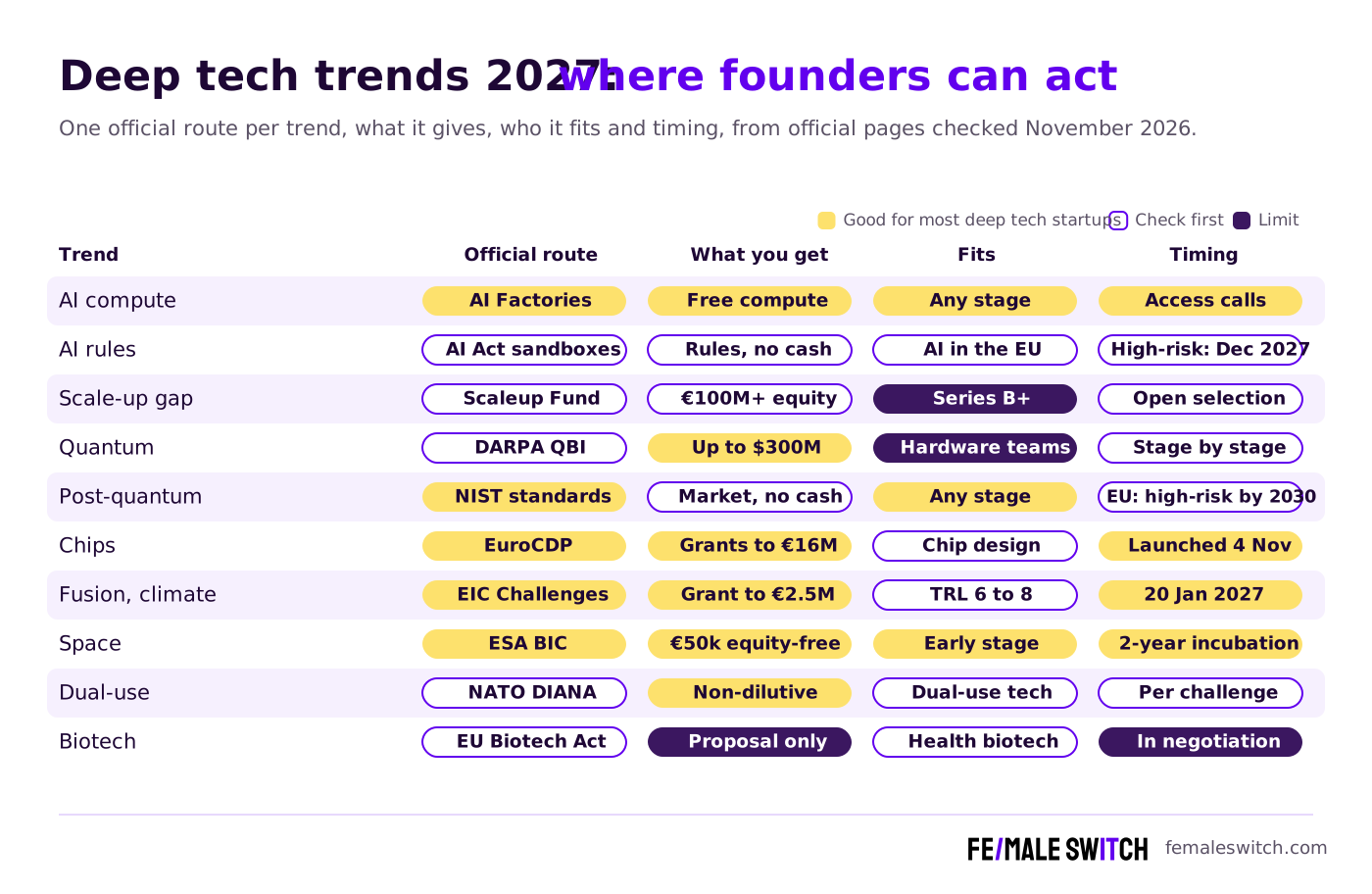
Deep Tech Trends 2027 at a Glance
Sources: WIPO Global Innovation Index 2026 and the official programme pages linked below, checked on 12 November 2026. Rules and calls change, so check each page before you apply.
The Big Picture: What WIPO's Global Innovation Index 2026 Says
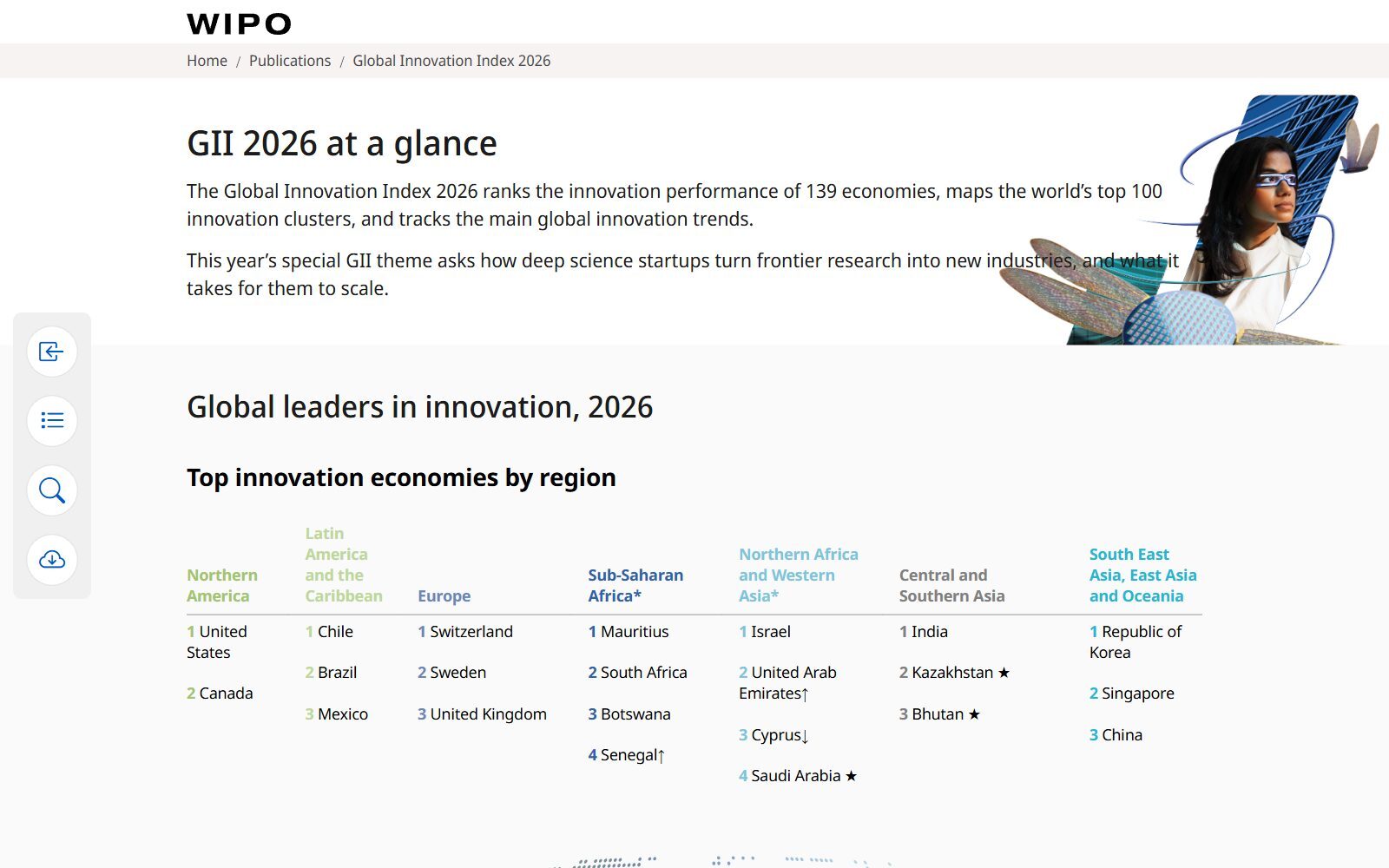
The most useful recent primary source on deep tech is WIPO's Global Innovation Index 2026, released in September 2026, whose special theme is deep science startups. It reports that global VC deal value grew about 28% to $510 billion in 2025, the strongest gain since 2021, while the number of deals fell for a fourth year in a row. With the new Dealroom-WIPO Deep Science Startup Tracker, it counts more than 30,000 deep science startups created since 2000, 16% of all venture-backed startups in 2025, together worth $7.6 trillion. The United States leads with 12,752 such firms, followed by China (3,466) and the United Kingdom (2,133), and deep science startups raised $122 billion in VC in 2025. Switzerland, Sweden, the United States, the Republic of Korea and Singapore top the overall index.
The 10 Deep Tech Trends for 2027
1. AI takes most of the money, and public AI compute opens to startups
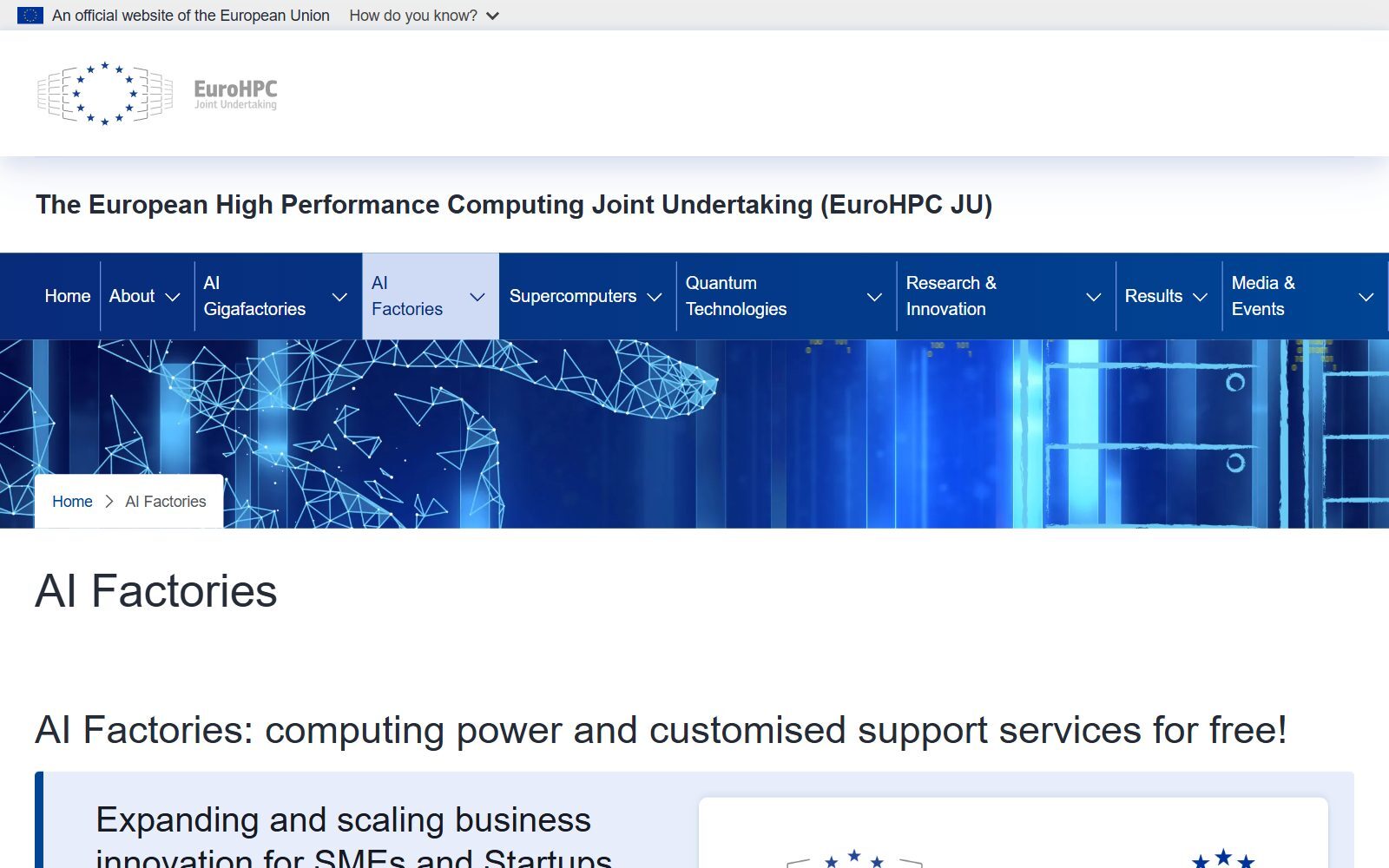
What is happening: according to WIPO's GII 2026 press release, AI accounted for 53% of global VC deal value in 2025 and 77% in the first half of 2026. Deep tech founders outside AI compete for a smaller share, and AI founders compete for expensive compute. Route: the EU's AI Factories (19 AI Factories and 13 AI Factory Antennas, according to the EuroHPC Joint Undertaking) offer computing power and customised support to SMEs and startups for free; you apply for access through their calls. The EU is also preparing larger AI Gigafactories, for which it amended the EuroHPC regulation on 16 January 2026. Agentic AI is now a research topic in its own right: the EIC Pathfinder Challenges 2027 (€82 million in total) include one on reliable AI agents (CLOWAI). For a startup: apply for public compute before you sign a large cloud contract, and if your product is not AI, show investors clearly why your science matters. Funding routes: grants for AI startups and VCs for AI startups.
2. AI rules become concrete: the AI Act timeline
What is happening: the European Commission's AI Act page says the Act entered into force on 1 August 2024 and became applicable on 2 August 2026, with some exceptions. Rules for general-purpose AI models have applied since 2 August 2025. The AI Omnibus, in force since 27 July 2026, moved the high-risk rules: 2 December 2027 for Annex III uses (such as education and employment) and 2 August 2028 for AI built into regulated products. Route: more innovators get access to AI regulatory sandboxes, including an EU-level sandbox, and SME simplifications now also cover small mid-caps. For a startup: check now whether your product is high-risk; deep tech AI in medical devices, machinery or robotics often is, and documentation takes months.
3. The scale-up gap: deep science ventures stall at Series B and C
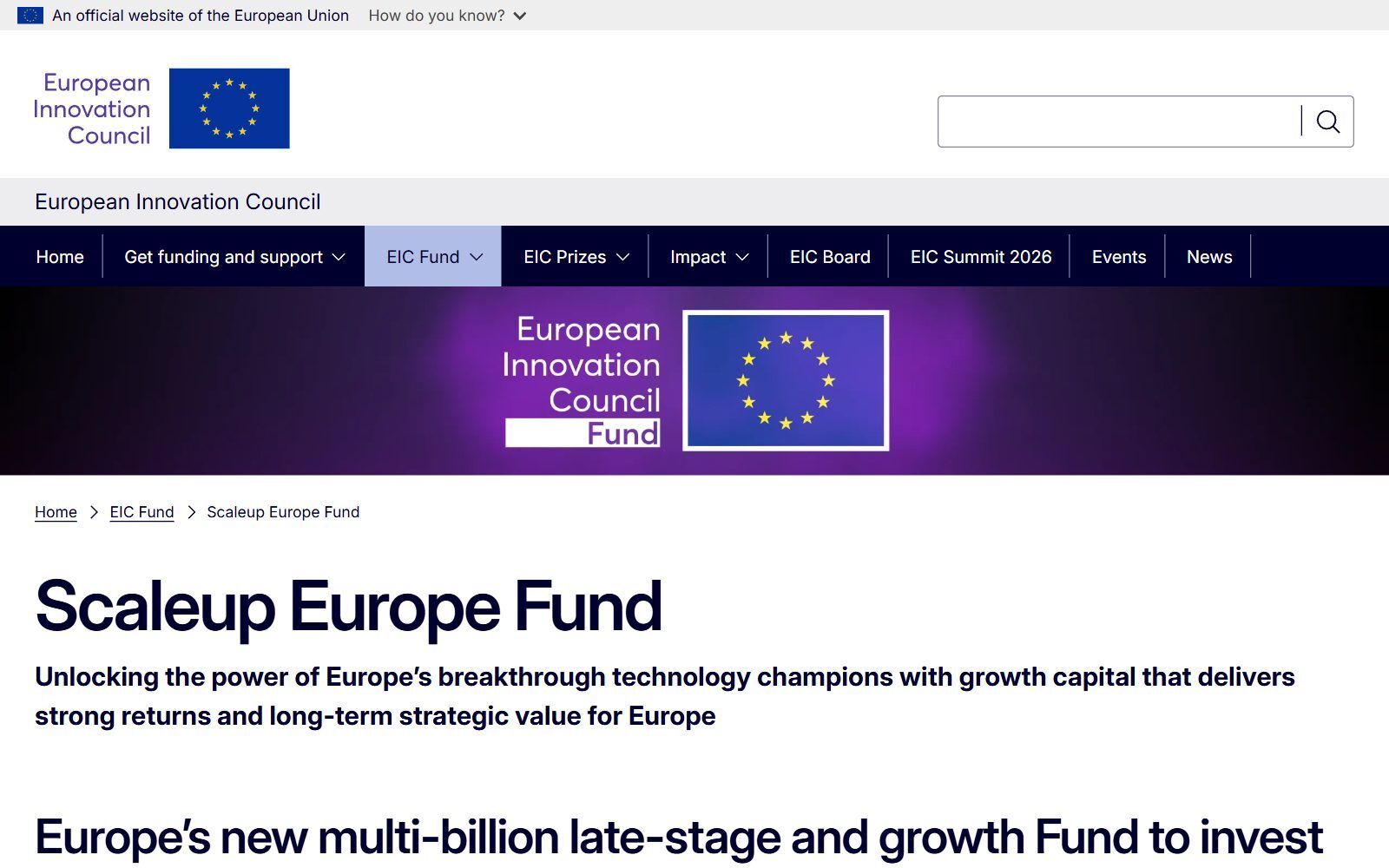
What is happening: WIPO finds that deep science ventures stall at predictable points, from research to proof of concept and from pilot to commercial deployment, where Series B and C rounds are thinner; it calls industrialisation, not invention, the binding constraint. Route: in Europe, the EIC Accelerator pays a grant of up to €2.5 million (TRL 6 to 8) plus optional equity of €1 million to €10 million, with 2027 batching dates on 20 January, 17 March, 1 September and 4 November. For later rounds, the Scaleup Europe Fund, launched at the EIC Summit on 3 June 2026 with EQT as preferred fund manager, targets about €5 billion (the Commission put in €1 billion) and invests €100 million and more per company in AI, quantum, semiconductors, robotics, energy, space, biotech, medtech, advanced materials and agritech. For a startup: map your path to Series B before your seed round, and keep the paperwork for EU instruments ready. Private investors: deep tech VCs, deep tech VCs in Europe and deep tech VCs in North America.
4. Quantum computing is judged by hard benchmarks
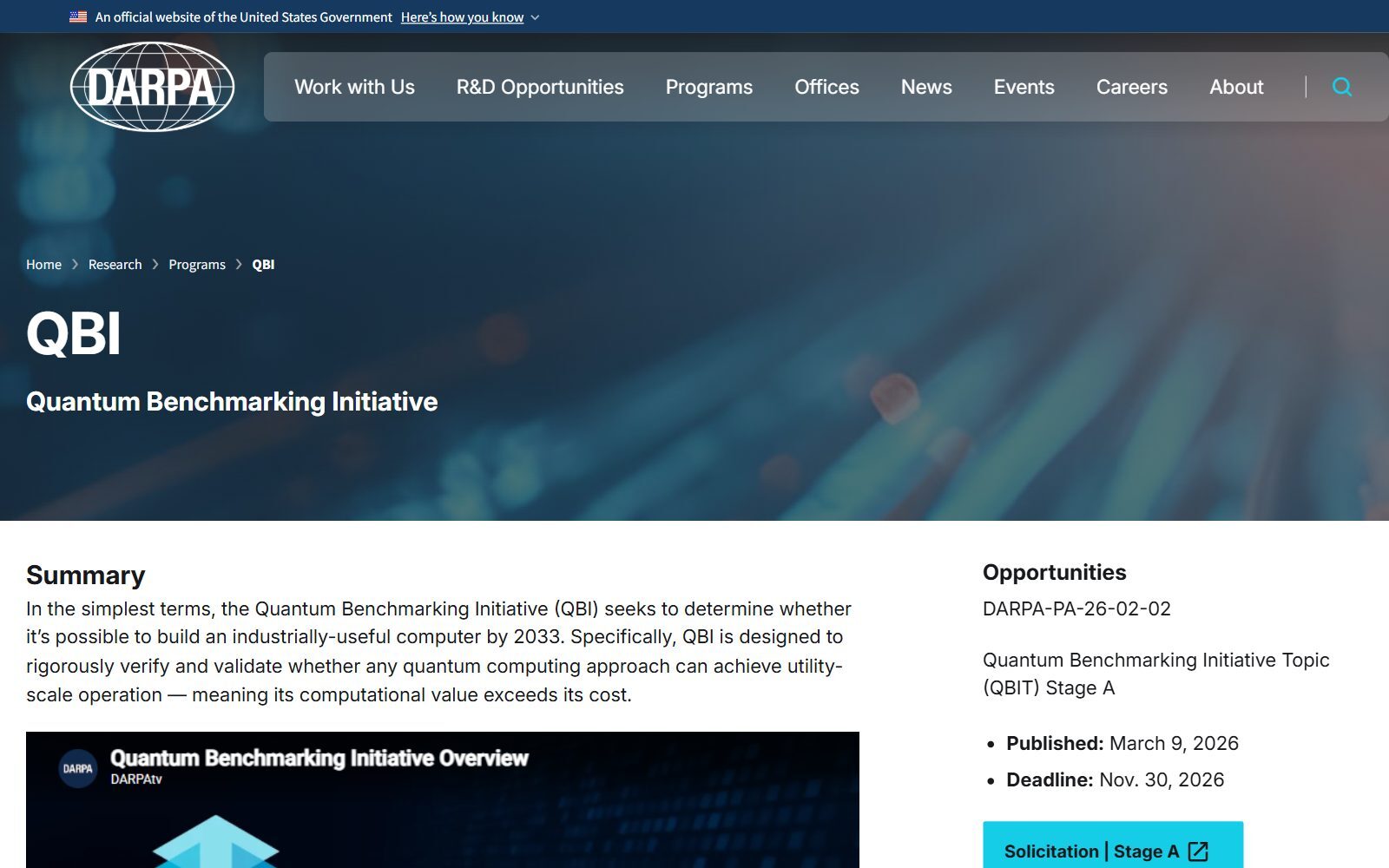
What is happening: DARPA's Quantum Benchmarking Initiative (QBI) tests whether an industrially useful quantum computer can be built by 2033, meaning one whose computational value exceeds its cost. It is staged: Stage A awards up to $1 million, Stage B up to $15 million and Stage C up to $300 million, and DARPA lists the companies in each stage on its page. A new Stage A opportunity was published on 9 March 2026 and set to close on 30 November 2026. In Europe, the Commission's quantum page says the Quantum Europe Strategy was adopted in July 2025 and that an EU Quantum Act was scheduled for adoption in 2026, to scale up industrial capacity including pilot lines; the Chips Joint Undertaking also runs six quantum chip pilot lines. The EIC Pathfinder Challenges 2027 include a quantum energetics topic. For a startup: buyers and investors now ask for independent benchmarks, not qubit counts. Quantum software and component startups can sell into the hardware teams.
5. Post-quantum cryptography moves from standard to deadline
What is happening: NIST released its first post-quantum cryptography standards in August 2024 (FIPS 203 ML-KEM, FIPS 204 ML-DSA and FIPS 205 SLH-DSA), is standardising Falcon and HQC, and says it will remove quantum-vulnerable algorithms from its standards by 2035. In the EU, the coordinated PQC roadmap adopted in June 2025 says all Member States should start the transition by the end of 2026 and move high-risk use cases no later than the end of 2030. For a startup: banks, governments and critical infrastructure must now buy quantum-safe products, which opens a market for crypto-inventory, migration and hardware security startups. Every deep tech startup that ships connected devices should plan its own migration.
6. Chip design opens to startups
What is happening: the European Chips Act (in force since 21 September 2023) funds pilot lines and 30 chip competence centres, and the Commission proposed a Chips Act 2.0 in June 2026. On 4 November 2026 it launched the European Chip Design Platform (EuroCDP), which will mobilise €525 million and gives chip design companies access to design tools, design support, IP blocks and manufacturing capacity. Its factpage lists grants of up to €100,000 for early-stage startups and up to €16 million for mature startups. For a startup: the costly design tools and tape-outs that kept chip startups out are now partly public; start with your national chip competence centre. WIPO also notes that the deep science VC mix is tilting towards semiconductors and robotics.
Join F/MS: Startup Facilitator & Incubator and unlock your startup dreams today! Get your first customers, register you company in the Netherlands and get startup visas for the team.
7. Fusion and climate hardware get their own programmes
What is happening: the US Department of Energy's Office of Fusion leads a Fusion Science and Technology Roadmap (Part I October 2025, Part II June 2026) aimed at a US fusion pilot power plant in the mid-2030s, aligned with private-sector timelines. Private fusion companies can get lab support through INFUSE, whose FY2027 call asked for applications by 13 December 2026. In Europe, the EIC Accelerator Challenges 2027 (€150 million, €20 to €50 million per challenge) cover fusion power plants, carbon removal and utilisation, climate-neutral and smart cities, and ocean observation technologies. For a startup: component makers (magnets, lasers, materials, sensors) can sell to fusion and climate projects without building a power plant themselves. See the grants for deep tech startups for every EIC route.
8. The space economy becomes regulated
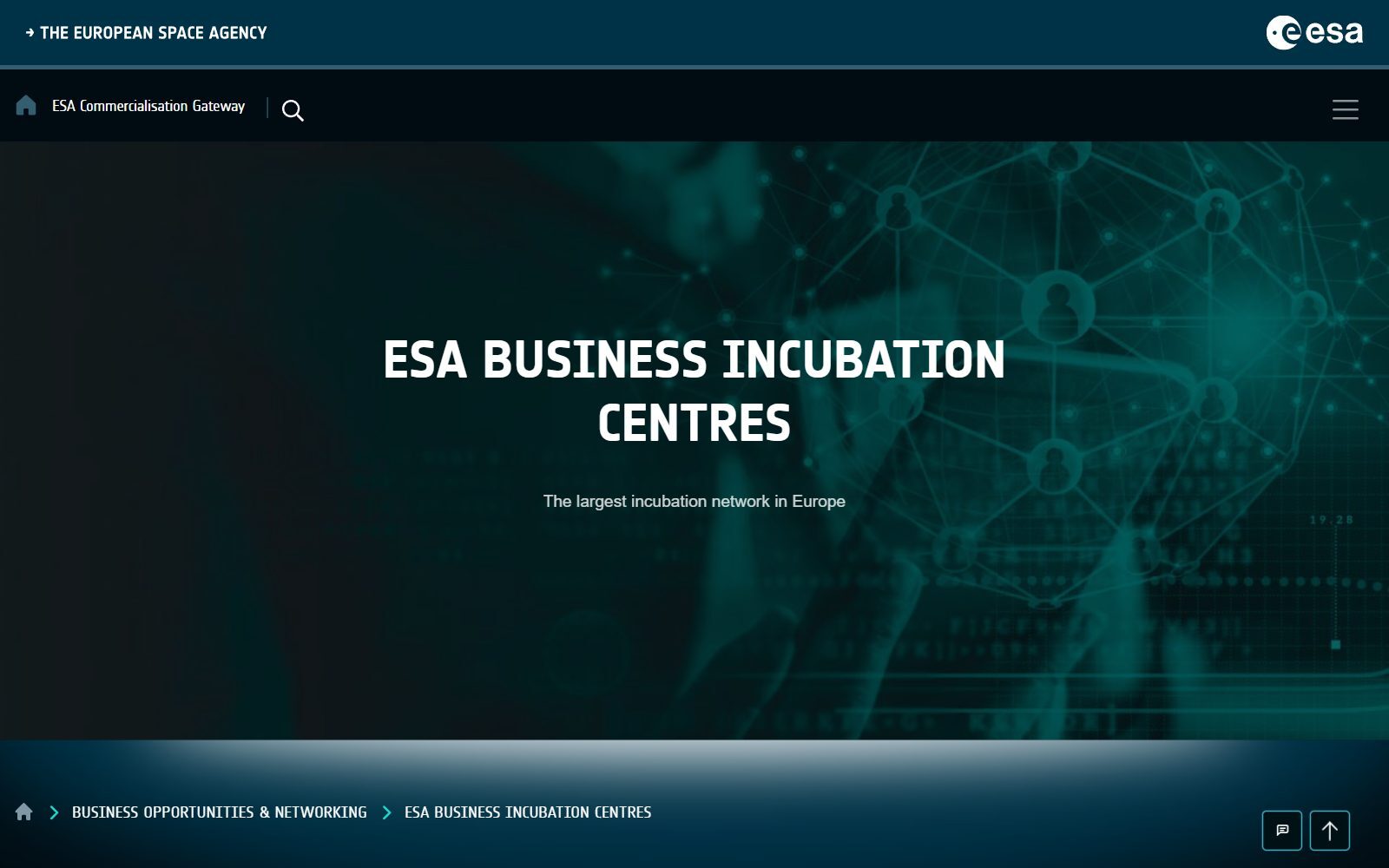
What is happening: the Commission proposed the EU Space Act on 25 June 2025: one set of rules for safety (tracking objects, cutting space debris), resilience (cybersecurity) and sustainability, applying to EU and non-EU operators serving Europe. It is being negotiated by the European Parliament and the Council; requirements are scaled to company size and risk, with a support package for start-ups and SMEs. Route: ESA Business Incubation Centres offer up to two years of incubation and €50,000 of equity-free funding for product and IP development; ESA says over 2,000 start-ups have been supported. For a startup: design for debris, cybersecurity and environmental rules from day one; in-orbit servicing and debris removal are named as technologies the Act supports.
9. Dual-use and defence tech find public buyers
What is happening: NATO's Defence Innovation Accelerator for the North Atlantic (DIANA) runs challenge programmes asking innovators for deep tech dual-use technologies: 3 pilot challenges in 2023, 5 in 2024 and 10 in 2025. Selected companies get non-dilutive grants and access to 16 accelerator sites and over 200 test centres; the NATO DIANA Capital Network links them with NATO-aligned investors, and in April 2026 its Rapid Adoption Service enabled a first R&D contract between an Ally and a company. For a startup: a defence or security customer can be your first buyer, but check export rules and whether your investors accept defence work. Programmes: deep tech accelerators and deep tech startup competitions.
10. Biotech and biomanufacturing get their own law
What is happening: the Commission proposed the European Biotech Act on 16 December 2025 to strengthen health biotechnology and biomanufacturing: easier access to funding for start-ups and SMEs, a shorter time to market, faster multinational clinical trials and biosecurity safeguards. It now goes through the European Parliament and the Council. Route: while the law is negotiated, biotech founders use existing grants, such as the EIC programmes in Europe or India's Biotechnology Ignition Grant; see deep tech grants in Asia and deep tech grants in North America. For a startup: WIPO notes that over 40% of energy and life sciences ventures created since 2010 spun out of academic research, so licence terms with your university matter as much as the science.
Which Trends Fit Your Deep Tech Startup?
- Early-stage AI or software-heavy deep tech: AI Factories for compute, the AI Act timeline for compliance, then the EIC Accelerator.
- Hardware startup (chips, quantum, photonics, fusion components): the European Chip Design Platform, DARPA or EIC challenges, and patient investors.
- Security startup: post-quantum migration is the clearest new market until 2030 and 2035.
- Space or dual-use startup: ESA BIC for the first €50,000, then NATO DIANA challenges for a public first customer.
- Growth-stage company in Europe: the Scaleup Europe Fund, the EIC STEP Scale Up investments and the private funds in our VC guides.
- Biotech startup: track the Biotech Act's clinical trial rules and use national grants meanwhile.
What Happened to the 2025 Trends
The 2025 version of this article listed 10 trends taken from media predictions. What changed:
- AI domination and agentic AI: confirmed by WIPO's data (trend 1 above); the unsourced "2-3x valuation premium" is removed.
- Quantum computing and post-quantum cryptography: still trends (4 and 5), now with official programmes; the revenue forecast and the "31% of IT departments" figure are removed as unsourced.
- Hardware: now covered by chips (trend 6) and fusion (trend 7); the "40% of VC funding" forecast is removed.
- Bioeconomy: now trend 10, with the EU's Biotech Act proposal.
- Consolidation and M&A, FoodTech, blue economy: removed as stand-alone trends because we found no official programme or primary data for them; ocean technology survives inside the EIC's 2027 ocean observation challenge.
- Deep Tech Talent Initiative: the EIT says the initiative reached its goal of one million talents trained, so it is no longer a forward-looking trend.
How Founders Turn Deep Tech Trends Into a Plan
Trends only help if they change what you do next. Founders who use them well pick one trend that their technology rides, find the public programme that pays for the riskiest step, and line up private money for the step after. Our guides go deeper on each piece: deep tech countries in Europe, deep tech cities in Europe, deep tech cities in Asia, deep tech incubators, deep tech incubators in Europe, deep tech accelerators in Europe, deep tech angel investors in Europe, deep tech VCs in Asia and deep tech grants in South America. AI founders can compare the best countries for AI startups and AI VCs in Europe; women-led teams should also see grants for female entrepreneurs in Europe. EU applicants can track every deadline in our EU grant calendar for 2027 and the step-by-step EIC Accelerator guide.
FAQ About Deep Tech Trends in 2027
What are the biggest deep tech trends in 2027?
AI taking most venture money and public AI compute opening to startups, the AI Act's rules, the Series B and C funding gap, quantum benchmarks, post-quantum cryptography, chip design for startups, fusion and climate hardware, the regulated space economy, dual-use defence tech, and biotech.
How much venture capital goes to deep tech?
According to WIPO's Global Innovation Index 2026, deep science startups raised $122 billion in VC in 2025, while total VC deal value was about $510 billion.
How many deep science startups are there?
WIPO counts more than 30,000 deep science startups created since 2000, 16% of venture-backed startups in 2025, led by the United States, China and the United Kingdom.
Is AI crowding out other deep tech?
AI took 53% of global VC deal value in 2025 and 77% in the first half of 2026, according to WIPO, so non-AI deep tech founders compete for a smaller share and lean more on public programmes.
When do the EU AI Act high-risk rules apply?
After the AI Omnibus, from 2 December 2027 for Annex III uses such as education and employment, and from 2 August 2028 for AI built into regulated products.
When must companies switch to post-quantum cryptography?
The EU roadmap asks Member States to start by the end of 2026 and move high-risk uses by the end of 2030. NIST will remove quantum-vulnerable algorithms from its standards by 2035.
Can a small startup get EU chip design funding?
Yes. The European Chip Design Platform, launched on 4 November 2026, lists grants of up to €100,000 for early-stage startups and up to €16 million for mature startups, plus design tools and support.
Where can a space startup get its first funding?
ESA Business Incubation Centres give up to two years of incubation and €50,000 of equity-free funding.
Which deep tech trends are good for women founders?
All of them; women-led deep tech startups in Europe can also apply to Women TechEU, covered in our guide to grants for deep tech startups.
Where can I get a backlink by writing about my deep tech startup?
You can publish a guest post in one of the Fe/male Switch startup blogs, which rank in Google and in AI tools. Get a quality backlink.
About the Author
Violetta Bonenkamp, also known as MeanCEO, is an experienced startup founder with an impressive educational background including an MBA and four other higher education degrees. She has over 20 years of work experience across multiple countries, including 5 years as a solopreneur and serial entrepreneur. Throughout her startup experience she has applied for multiple startup grants at the EU level, in the Netherlands and Malta, and her startups received quite a few of those. She’s been living, studying and working in many countries around the globe and her extensive multicultural experience has influenced her immensely.
